Long Engine Life Starts With Reiff
Place an Order | Contact Us | FAQ
- Why preheat your aircraft engine?
- Why buy a Reiff Preheat System?
- Engine Preheat Systems
- Ordering Info, Terms, Return Policy
- Replacement parts
- Accessories - hard wired power plug, cowling covers, remote controls
- Installation Instructions
- FAQ
- Warranty
- FAA Approval
- Customer Comments
- Prominent Customers
- Donations
- Magazine Articles
- Company History
- Contact Us
- Intro Page
| SYSTEM
SUMMARY
See Application List for detailed listing. Prices shown are for 120v. Add 25% for 220V See below for photos |
|||
|
|
Standard System | XP System | HotStrip Oil Sump System |
| Watts
per cylinder
Watts on oil sump |
50w
100w |
100w
200w |
None
200w |
Cylinder Temp Rise* Oil Temp Rise* |
81F 88F |
119F 128F |
37F 80F |
| How fast will it heat my engine? | |||
| How long does it take to install a system? | |||
| Add Oil Cooler Heater Option to any system | |||
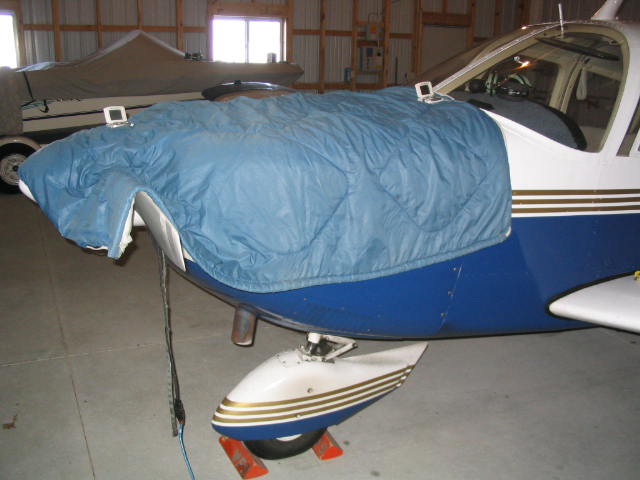
* Temps are RISE ABOVE AMBIENT after 12 hrs, on our Cherokee 235 with Lyc 0-540. Aircraft was in our unheated hanger, the air inlets were plugged with foam rubber cowl plugs, the cowling was covered with a blanket which laid over the top and hung about halfway down the sides, and the sump had 9 qts of oil. The temperatures were obtained by a calibrated digital thermometer with a remote probe inserted between the top two fins on the center left cylinder, and a second probe dropped down the oil filler tube with the tip suspended at the 4.5 qt level.
HEATING TIME (F)
|
||||||
|
|
XP System
100w per cyl 200w on oil |
Standard System
50w per cyl 100w on oil |
HotStrip Oil Sump System
200w on oil |
|||
| ELAPSED HOURS | CYLINDERS | OIL |
CYLINDERS | OIL | CYLINDERS | OIL |
| 0 | 20 | 20 | 20 | 20 | 20 | 20 |
| 1 | 41 | 66 | 35 | 52 | 26 | 66 |
| 2 | 60 | 84 | 46 | 63 | 33 | 80 |
| 3 | 77 | 100 | 57 | 73 | 37 | 87 |
| 5 | 105 | 123 | 74 | 87 | 46 | 96 |
| 12 | 147 | 156 | 103 | 110 | 60 | 104 |
Actual temps on our Cherokee 235 with Lyc 0-540. Aircraft was in our unheated hanger, the air inlets were plugged with foam rubber cowl plugs, the cowling was covered with a blanket which laid over the top and hung about halfway down the sides, and the sump had 9 qts of oil. The temperatures were obtained by a calibrated digital thermometer with a remote probe inserted between the top two fins on the center left cylinder, and a second probe dropped down the oil filler tube with the tip suspended at the 4.5 qt level.
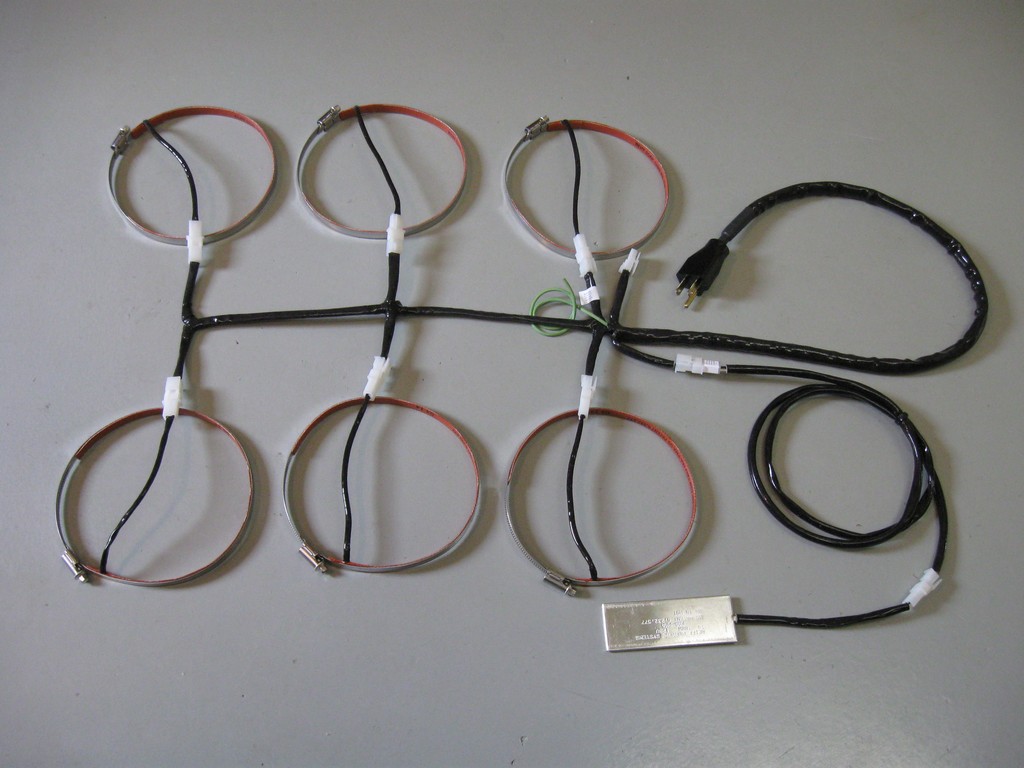
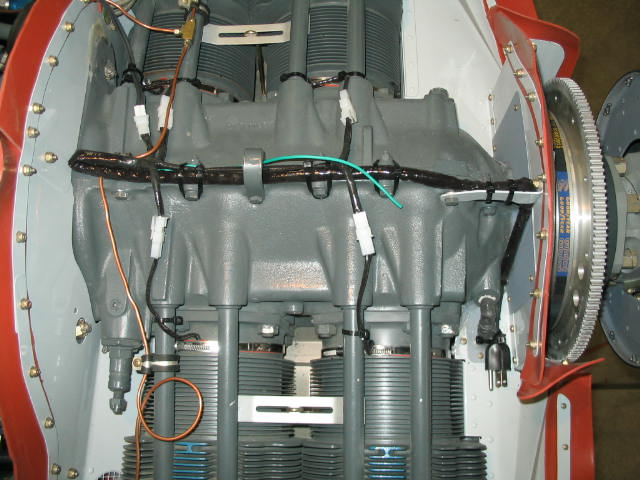
Standard System 50 watt band heaters clamp around the cylinders and a 100 watt aluminum HotStrip element epoxies to the oil sump (epoxy included). Heats your engine about 80F above ambient overnight. |
 |
|
|
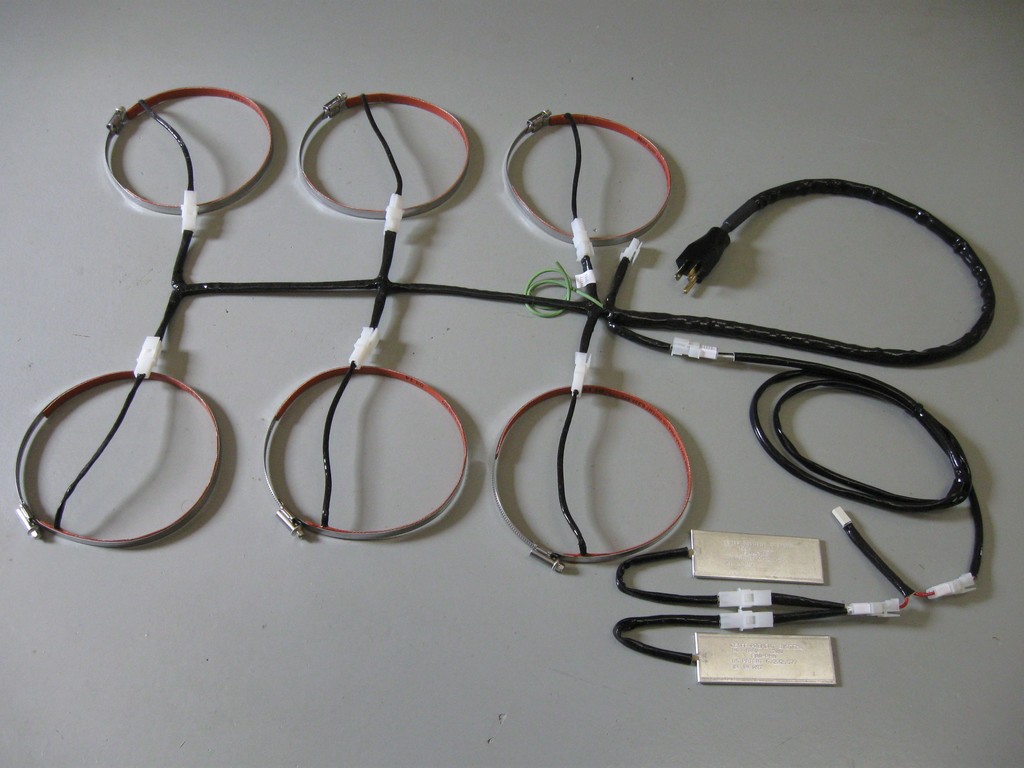
XP System XP means "Xtra Performance". This is our best system, doubles the wattage of the Standard System for faster heating and colder climates. 100 watts per cylinder + 200 watts on the oil sump. Heats your engine about 120F above ambient overnight. Thermostat limits oil to 190F APPLICATIONS LIST & ORDERING INFO
|
 |
|
|
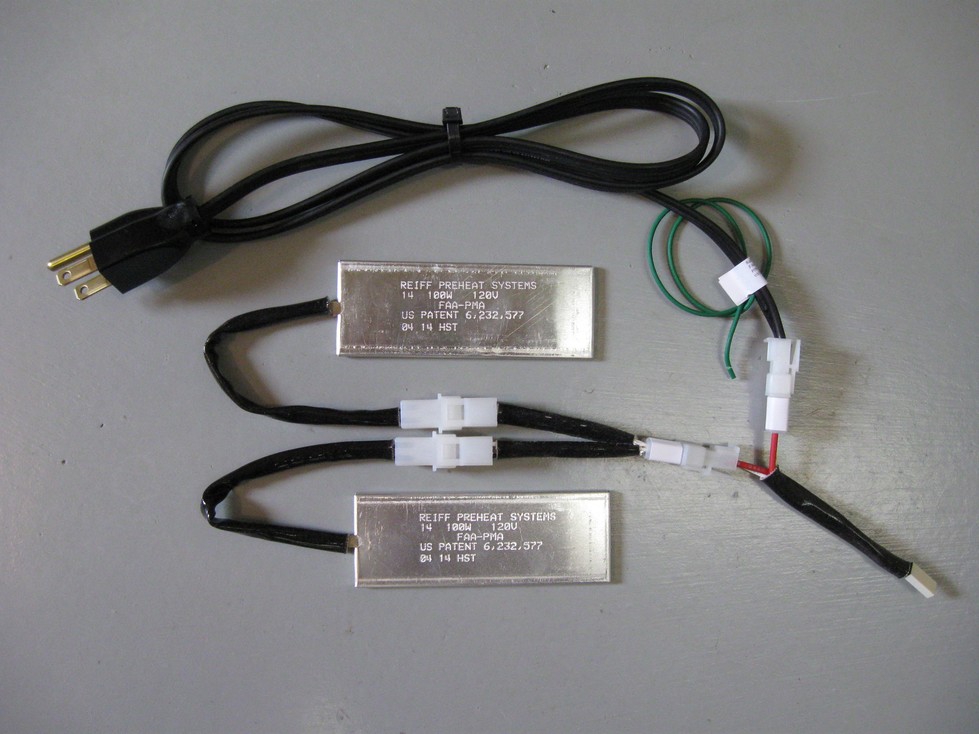
HotStrip Oil Sump Heater System Two 100 watt aluminum heaters epoxy to the oil sump. (Epoxy included) Thermostat limits oil to 190F
APPLICATIONS LIST & ORDERING INFO
|
|
|
 |
|
Place an Order | Contact Us | FAQ
Last updated 01/08/2025
"And once you have tasted flight you will walk the earth with your eyes skyward,
for there you have been and there you long to return." Leonardo da Vinci